Darra sits beside the Ipswich Motorway and the Ipswich rail line, about 20 minutes from our base. It's an older working suburb with a strong local food scene around the station, and a lot of its housing is now being renovated, raised or replaced.
Old houses, bigger lots, new builds
Much of Darra's older housing dates from the post-war decades, many of them timber Queenslander-style homes from the 1940s and 1950s, and most blocks are large enough to subdivide. As those homes are renovated, raised or knocked down for new builds and duplexes, the ground often gets reshaped. Building under a raised house, levelling a back yard for a granny flat, or cutting a driveway down to a new garage all create the need for retaining.
Retaining for infill and duplexes
When a lot is split or a second dwelling goes in, walls tend to end up close to buildings and boundaries. Under Building Regulation 2021, Schedule 1, a wall within 1.5 m of a building is outside the exemption from building approval. Brisbane City Council's retaining wall page also notes that walls associated with a subdivision or a material change of use may need planning approval. If your wall is part of a bigger project, ask your builder or certifier how it fits into the overall approval rather than treating it as a separate job.
Industrial neighbours
Darra has long had industry alongside housing, including the Queensland Cement and Lime works beside the railway, which opened in 1917 and closed in 1998. Freight and warehouse businesses now use that site. Some residential lots back onto industrial land or the rail corridor. Where a wall is on a boundary with a commercial or rail property, there may be extra rules on access and what you can attach to the wall. Ask before you start.
Creek catchments and flooding
Darra drains to two creek systems: Oxley Creek, whose catchment includes Darra, and the Wolston Creek catchment around Centenary Village on the western side. Some streets are mapped for creek flooding or overland flow. Check the council's City Plan online mapping and FloodWise Property Report, because a flood overlay can bring in planning requirements even for a small wall.
Materials and budget
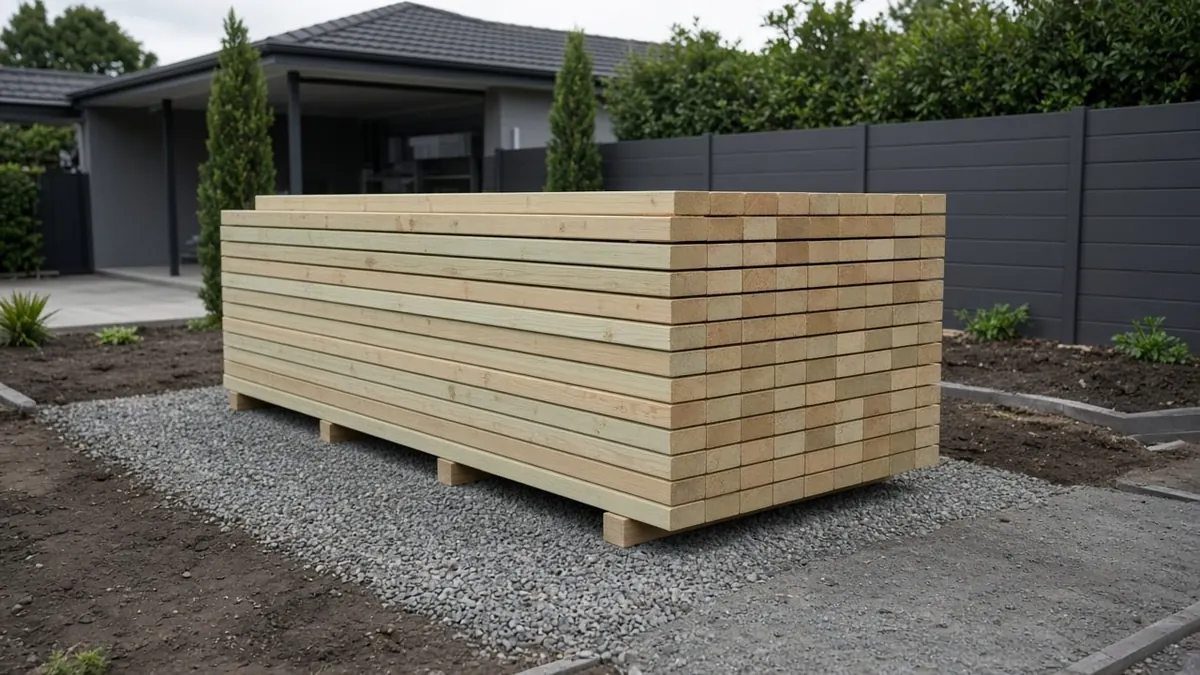
For under-house and side-boundary jobs, concrete sleepers on steel posts are a common choice because they are slim and can be installed with small machinery. Core-filled block suits taller walls and walls that hold a slab. Timber sleepers keep the first cost down for low garden walls, but expect a shorter life in wet clay. As a rough guide, published South East Queensland installed price bands start around $300–$450 per m² of wall face for timber and $550–$700+ per m² for concrete sleepers, before GST, excavation, drainage and engineering. See our cost guide for the source and what's excluded.
Before you ask for a quote
Say whether the wall is part of a renovation, raise or new build, who the certifier is (if there is one), and how close the wall is to the house and boundary.
Darra questions
I'm raising my Darra house. Will the under-house retaining need approval?
Probably. Walls that hold soil within 1.5 m of a building, or carry the house's load, are outside the Queensland exemption. They're usually designed by an engineer and approved as part of the raise.
Is Darra in a flood area?
Some low-lying streets near creek lines are mapped for creek flooding or overland flow. Check your exact address with Brisbane City Council's FloodWise Property Report.
Want a price for your wall?
Send the suburb, a rough length and height, and what the wall holds up. A licensed builder can then contact you to arrange a quote.